Three Percent Sustainability Challenge
  • Three Percent Sustainability Challenge
  • About
  • Contact

The right conditions

2/13/2022

0 Comments

 
Sustainability is more effective when actions take place under the appropriate conditions for the action.  For example, the showy milkweed plant, which is essential for the monarch butterfly, is native to this area.  Because monarch populations are significantly declining, many people are planting milkweed.  I planted milkweed seeds several times with no success.  Then, on a walk in a natural area, I noticed that milkweed grows in moist soil near the edges of lakes and canals, not in dry clay soil such as is in my yard.  Understanding and developing the correct conditions necessary for success would have probably resulted in a group of healthy milkweed plants in my yard.  This is true for most actions – knowledge can save time and energy and increase the likelihood of success.  Before you start a sustainability project, do a little research.  Here are a few ideas to ponder.   
  • Cooking and eating more sustainably is about more than just choosing sustainable foods and ingredients.  Match the size of the pot to the size of the stovetop element so you don’t waste energy heating the air around the pot.  If you have a toaster oven, use it for small batch baking rather than using the standard larger oven.  When using the oven, plan to cook more than one item while the oven is hot.  Choose a menu appropriate for the weather – don’t use the oven for several hours on a day when the air conditioner is also operating.    
  • There are many ways to make a house more energy efficient.  Understanding your individual situation will help you know how to make the biggest difference for the money and resources you will have to spend.  For a house with poor insulation, insulating the attic might be the most impactful change.  For house with old, drafty windows, caulking windows and adding heavy curtains might be an easy way to reduce energy loss if you cannot replace the windows.  Using appliances more effectively (read the instruction manual if you have it) can reduce the energy used in your home. 
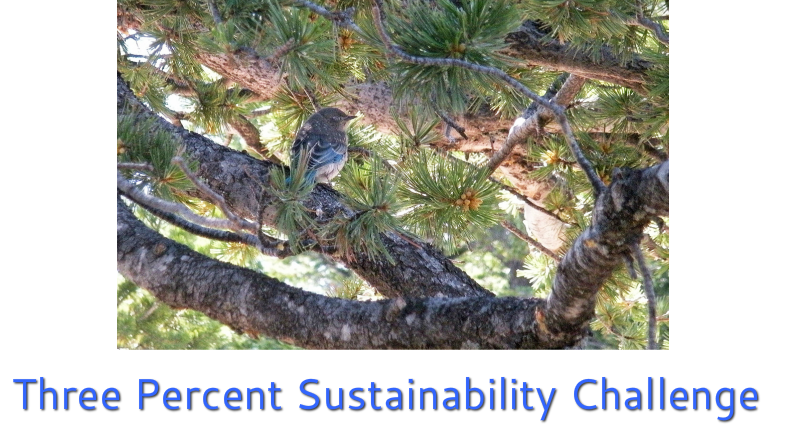
  • If you are trying to create habitat for native creatures, study what meets their needs.  Many pollinators (bees, moths, butterflies, etc.), birds, and other creatures require native plants to thrive.  Non-native plants and creatures may become an invasive nuisance instead of enhancing habitat.  Some birds will eat seeds from a bird feeder, but many will not.  These birds may require a ground feeder or berries instead of seeds. 
0 Comments


Leave a Reply.

    Archives

    January 2026
    December 2025
    November 2025
    October 2025
    September 2025
    August 2025
    July 2025
    June 2025
    May 2025
    April 2025
    March 2025
    February 2025
    January 2025
    December 2024
    November 2024
    October 2024
    September 2024
    August 2024
    July 2024
    June 2024
    May 2024
    April 2024
    March 2024
    February 2024
    January 2024
    December 2023
    November 2023
    October 2023
    September 2023
    August 2023
    July 2023
    June 2023
    May 2023
    April 2023
    March 2023
    February 2023
    January 2023
    December 2022
    November 2022
    October 2022
    September 2022
    August 2022
    July 2022
    June 2022
    May 2022
    April 2022
    March 2022
    February 2022
    January 2022
    December 2021
    November 2021
    October 2021
    September 2021
    August 2021
    July 2021
    June 2021
    May 2021
    April 2021
    March 2021
    February 2021
    January 2021
    December 2020
    November 2020
    October 2020
    September 2020
    August 2020
    July 2020
    June 2020
    May 2020
    April 2020
    March 2020
    February 2020
    January 2020
    December 2019
    November 2019
    October 2019
    September 2019
    August 2019
    July 2019
    June 2019
    May 2019
    April 2019
    March 2019
    February 2019
    January 2019
    December 2018
    November 2018
    October 2018
    September 2018
    August 2018
    July 2018
    June 2018
    May 2018
    April 2018
    March 2018
    February 2018
    January 2018
    December 2017
    November 2017
    October 2017
    September 2017
    August 2017
    July 2017
    June 2017
    May 2017
    April 2017
    March 2017
    February 2017
    January 2017
    December 2016
    November 2016
    October 2016
    September 2016
    August 2016
    July 2016
    June 2016
    May 2016
    April 2016
    March 2016
    February 2016

    RSS Feed

  • Three Percent Sustainability Challenge
  • About
  • Contact